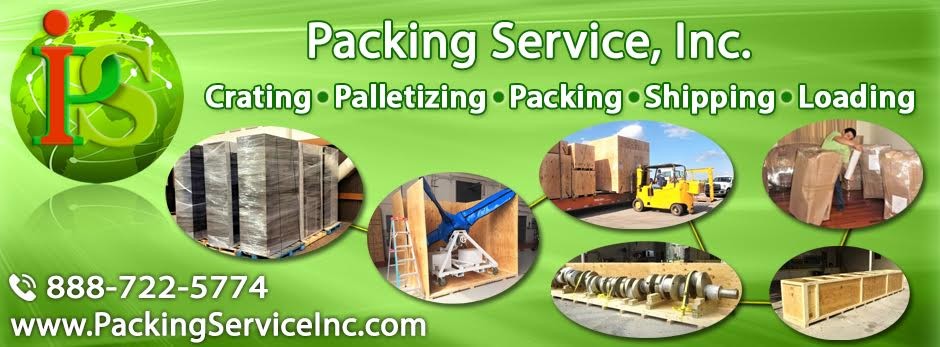
In the world of high-volume shipping, the pallet is the unsung hero of the global supply chain. While individual boxes are easy to handle by hand, they are incredibly vulnerable to damage and loss when shipped solo. Palletizing—the process of consolidating multiple items into a single, cohesive unit load on a pallet—is the industry standard for ensuring that bulk shipments remain secure, organized, and easy to transport.
Specialized providers like Packing Service Inc. have refined palletizing into a precise discipline, moving beyond mere “stacking” to a system of protection that safeguards assets from the warehouse floor to their final destination.
Why Palletizing is a Logistics Necessity Palletizing transforms a collection of loose items into a “unitized” load. This shift provides three immediate advantages:
- Mechanical Handling Efficiency: Once items are palletized, they can be moved quickly and safely by forklifts and pallet jacks. This eliminates the need for manual “touching” of every box, which is where most human errors and workplace injuries occur.
- Structural Stability: By grouping boxes together, the load gains collective strength. When properly stacked, the vertical edges of boxes align to create a column of support that can withstand the downward pressure of other freight.
- Risk Mitigation: Shipping items “one at a time” significantly increases the risk of a single box being misplaced or crushed. A palletized load is treated as a single manifest piece, making it much harder to lose and easier to track via GPS or RFID.
The Anatomy of a Secure Pallet
A professional palletizing service doesn’t just pile items on a wooden base; it follows a rigorous engineering protocol:
Quality palletizing also accounts for environmental factors. Slip sheets are often placed on the bottom to protect against moisture from the warehouse floor, and edge protectors (v-boards) are used to prevent the tension of the straps from crushing the corners of the boxes. Furthermore, for international shipping, pallets must meet ISPM 15 standards, requiring heat-treated wood to prevent the cross-border spread of timber-pests.
Conclusion
Palletizing is more than just a convenience; it is a critical layer of insurance for any business shipping freight. By investing in professional palletizing and shrink-wrapping services, you ensure that your goods are “non-stackable” and handled only by machinery, drastically reducing the “collision” damage common in manual loading. Whether you are shipping household goods or industrial components, a well-built pallet is the foundation of a successful delivery.
