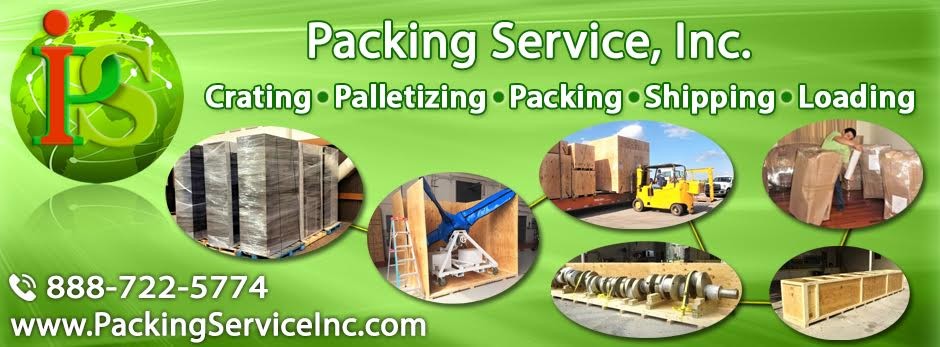
In the logistics industry, there is a common saying: “A shipment is only as strong as its weakest box.” While many people view packing as a simple chore of placing items into containers, professional-grade packing is actually a complex task that requires a deep understanding of physics, material science, and spatial reasoning. Packing Service Inc. has spent decades perfecting this craft, demonstrating that professional packing is the single most important factor in preventing damage during transit.
The Problem with “DIY” Packing
The primary reason for damage during shipping or moving is not the driver of the truck, but rather the empty space inside the box. When items are packed by amateurs, they often shift during transit. This movement creates kinetic energy; a three-pound glass vase can hit the side of a box with significantly more force if it has room to slide.
Professional packers eliminate this “internal movement” by using a combination of techniques:
- The “Double-Box” Method: For extremely fragile items, pros place a box inside a larger box, with at least two inches of cushioning material on all six sides.
- Custom Cushioning: Not all padding is created equal. Professionals know when to use anti-static peanuts for electronics, acid-free paper for fine art, or heavy-duty corrugated wraps for furniture legs.
- Weight Management: A common mistake is packing heavy items (like books) in large boxes. Professionals use small boxes for heavy items and large boxes for light, voluminous items (like linens), ensuring no single container exceeds a safe weight limit.
Specialized Packing for High-Value Items
Beyond standard household goods, certain items require specialized “white-glove” handling. Professional services provide solutions for categories that standard moving kits cannot handle:
- Electronics and IT Gear: These require non-conductive materials to prevent static discharge and specific orientations to protect internal components like hard drives or cooling systems.
- Glassware and Fine China: Professionals use a “cell-divider” system, ensuring that no two pieces of glass touch one another, creating a honeycomb of protection.
- Flat-Screen TVs and Monitors: These are particularly vulnerable to pressure. Professional packing involves specialized upright boxes with foam inserts that keep the screen from making contact with the outer walls of the container.
Efficiency and Space Optimization
Professional packing isn’t just about safety; it’s about economics. Shipping costs are often calculated by dimensional weight—a formula that considers the volume of the box as well as its weight. A professional packer can often consolidate items more effectively than an amateur, reducing the total number of boxes and potentially lowering the overall shipping costs. By maximizing the “cubic capacity” of every container, they ensure you aren’t paying to ship air.
Conclusion
The peace of mind that comes with professional packing is invaluable. When you hire experts to pack your home or business, you are essentially buying a guarantee that your belongings are prepared for the worst-case scenario on the road. From choosing the right grade of cardboard to the precise application of reinforced tape, professional packing is the foundation of a stress-free move. It transforms a chaotic pile of belongings into an organized, protected, and transportable inventory.
