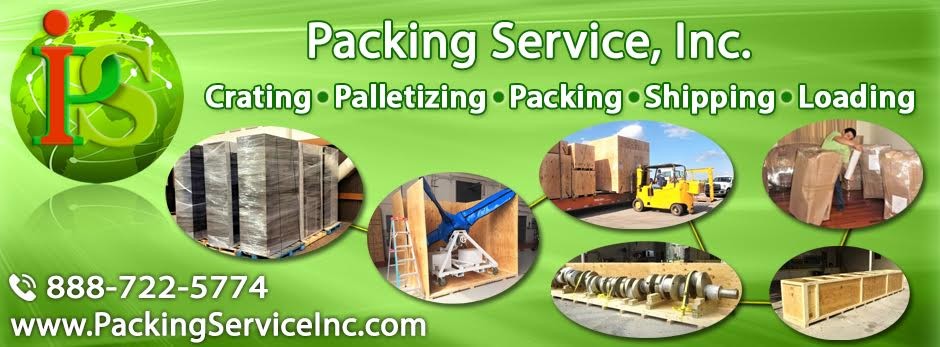
In the world of logistics and global shipping, the journey of a thousand miles begins with a single, well-secured pallet. While many businesses focus on the speed of transit or the cost of the carrier, the foundation of a successful delivery is often the physical foundation itself: the palletizing process. Companies like Packing Service Inc. have turned this logistical necessity into a specialized craft, ensuring that goods move from warehouse to destination without the dreaded “box-avalanche” or internal damage.
What is Palletizing?
At its core, palletizing is the process of placing goods—usually in boxes, crates, or bags—onto a pallet in a consolidated, organized manner. The goal is to create a single, stable “unit load” that can be easily moved by forklifts or pallet jacks. However, as any warehouse manager will tell you, there is a massive difference between simply stacking boxes and engineered palletization.
The Science of Stability
Professional palletizing, such as the services provided by Packing Service Inc., involves a strategic approach to weight distribution and structural integrity. There are three key pillars to a professional build:
- Weight Distribution: Heavy items must always form the base. This lowers the center of gravity and prevents the crushing of lighter, more fragile items placed on top.
- The “Interlocking” Method: Much like building a brick wall, boxes are often staggered or “interlocked.” This prevents the vertical columns from swaying or splitting apart during the vibrations of truck or air transport.
- Flat Tops: Professionals strive for a level top surface. A pyramid-shaped pallet is a nightmare for shipping companies because it cannot be double-stacked, often leading to higher shipping costs and a higher risk of the top items being toppled.
Protection Beyond the Stack
A pallet is only as good as its containment. This is where high-quality materials come into play. Shrink wrapping (or stretch wrapping) is the most common method, but it requires the right tension; too loose, and the load shifts; too tight, and you risk crushing the boxes.
For high-value or heavy-duty shipments, Packing Service Inc. often employs edge protectors and strapping. Edge protectors prevent the plastic wrap or metal straps from cutting into the cardboard boxes, while heavy-duty strapping ensures that even the heaviest machinery stays anchored to the wooden or plastic base.
Why Outsource Palletizing?
For many businesses, the “DIY” approach to palletizing leads to a high rate of Freight Insurance Claims. Most carriers will deny a claim if they can prove the damage was caused by improper palletization. By utilizing a professional service, businesses gain several advantages:
- Minimized Damage: Professional loaders know exactly how to brace for the specific rigors of ocean, air, or ground transport.
- Space Optimization: Experts can maximize the cubic inches of a pallet, potentially reducing the total number of pallets needed and lowering shipping rates.
- Safety: Improperly stacked pallets are a major safety hazard in warehouses. A professional build ensures the safety of everyone handling the cargo.
Conclusion
In a global economy, your product is often judged by its condition upon arrival. Palletizing is the “unsung hero” of the supply chain—the invisible shield that protects your bottom line. Whether you are shipping sensitive electronics or heavy industrial parts, the expertise provided by specialists like Packing Service Inc. ensures that your cargo doesn’t just get there, but gets there in one piece. When it comes to shipping, a solid foundation isn’t just a metaphor—it’s a logistical requirement.
