In the fast-paced world of global logistics, the safety of a shipment is often decided before it even touches a truck. While many view shipping as the simple act of moving an item from point A to point B, professionals know that the real work happens on the warehouse floor. Packing Service Inc. (PSI) has dedicated over two decades to perfecting this foundational step, and their specialized palletizing services represent the gold standard in cargo protection and transport efficiency.
More Than Just a Stack: The Engineering of Unit Loads
At first glance, palletizing might look like simply stacking boxes on a wooden platform. However, the service provided by PSI is a calculated engineering process designed to create a “unit load.” A unit load is a single, cohesive entity that behaves as one solid block during transit. This is vital because loose items are prone to shifting, vibrating, and colliding, which are the primary causes of transit damage.
PSI’s experts focus on three critical pillars of pallet stability:
- Weight Distribution: By placing the heaviest items at the bottom and ensuring the load is perfectly centered, PSI lowers the center of gravity, making the pallet resistant to tipping during sharp turns or sudden stops.
- Compression Integrity: Using specific stacking patterns—such as column stacking for maximum vertical strength or interlocking patterns for lateral stability—PSI ensures that the bottom boxes do not collapse under the weight of the top ones.
- Containment Force: Using industrial-grade stretch wrap and heavy-duty banding, PSI “anchors” the cargo to the pallet base. This prevents the cargo from sliding off the pallet when tilted or moved by a forklift.
The Power of On-Site Service
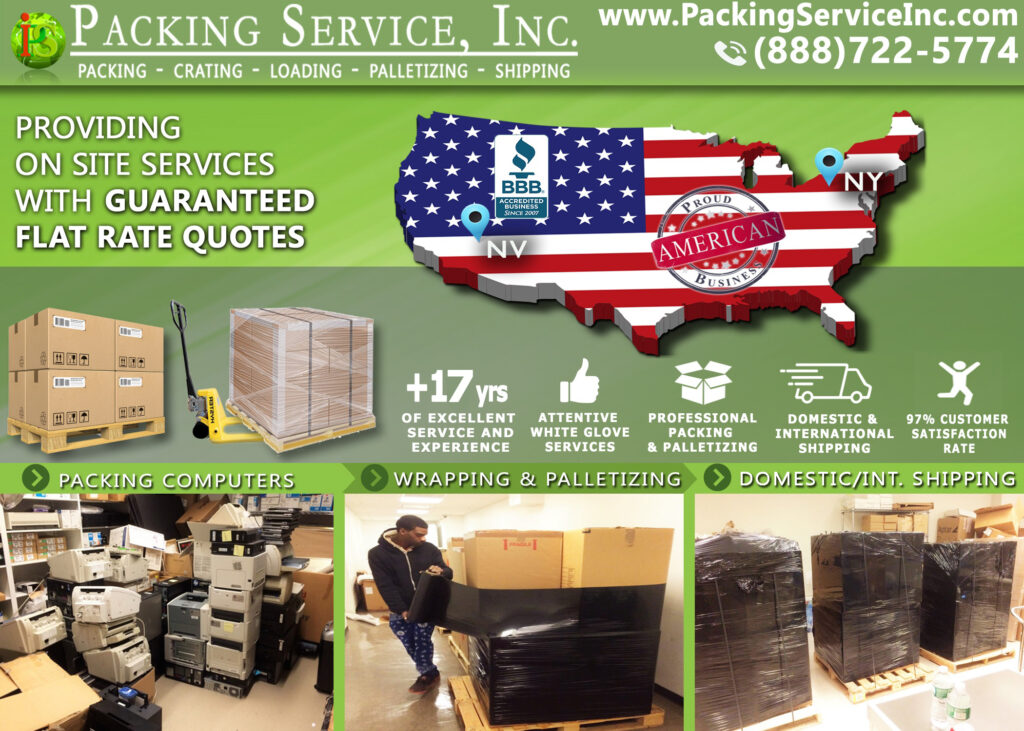
A primary differentiator for Packing Service Inc. is their commitment to on-site palletizing. Many shipping companies require customers to bring their goods to a terminal, but moving unpalletized items is a high-risk endeavor. PSI eliminates this risk by bringing their professional crew, pallets, and wrapping equipment directly to the customer’s location—whether it’s a residential garage, a corporate office, or a massive industrial warehouse. This “mobile warehouse” approach ensures that goods are protected from the very first moment they are moved.